Why 80% of Your Expensive Marketing Leads Never Become Implant Patients

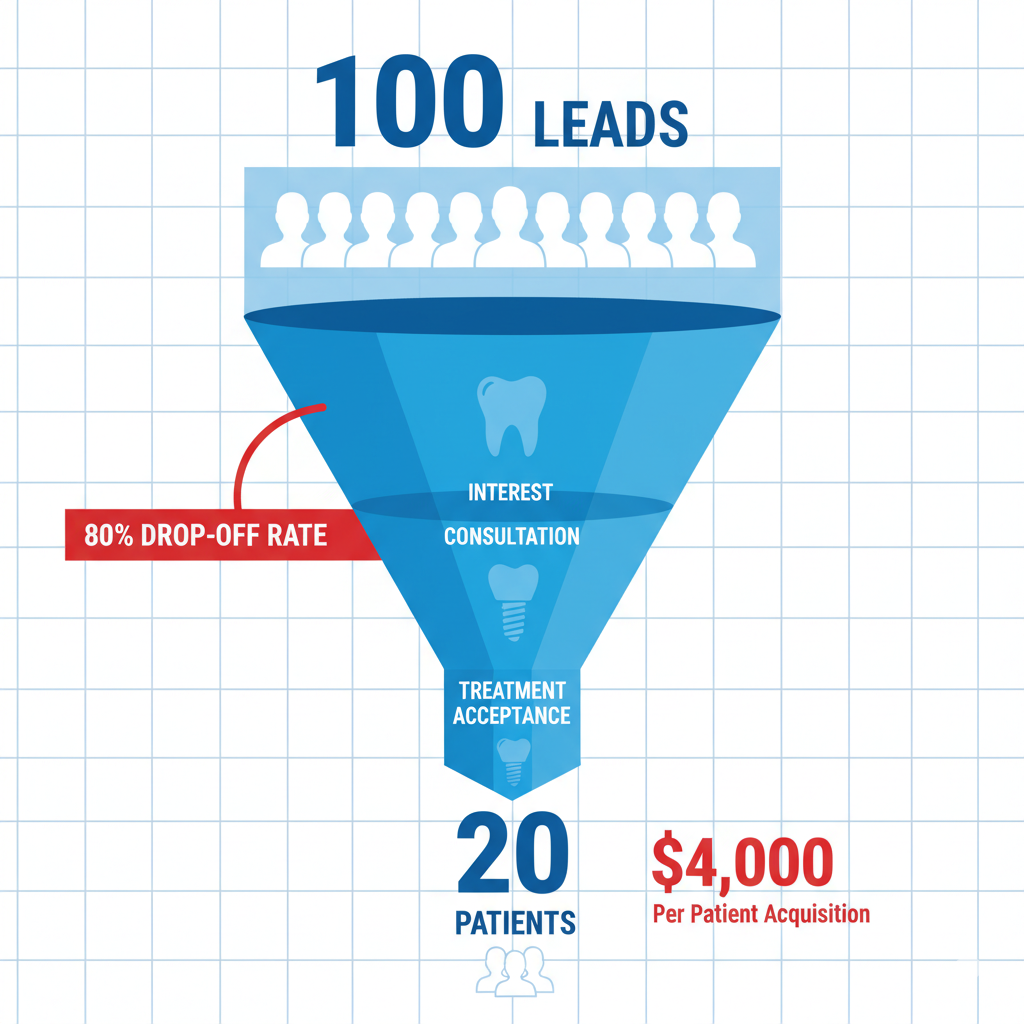
You’re spending $4,000 to acquire a single All-on-4 patient, yet 8 out of 10 leads never make it to treatment. Sound familiar? According to dental implant marketing research from leading U.S. agencies, the problem isn’t your advertising quality — it’s what happens after the lead enters your CRM.
The Cost of Delay: $130,000 in Lost Revenue
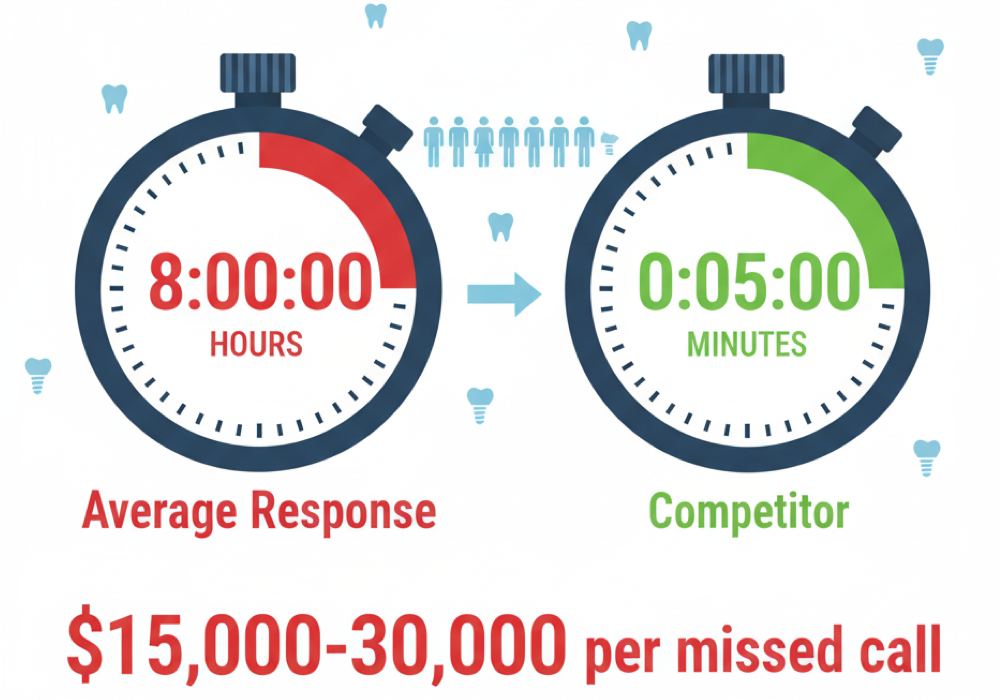
The statistics are sobering: the average response time to online inquiries at dental practices exceeds 8 hours. By then, your potential All-on-4 patient has already scheduled with your competitor. Phone calls fare even worse — 28% of incoming calls go unanswered, and 40% of callers can’t reach a treatment coordinator.
Every missed call represents a minimum $15,000–$30,000 loss in potential implant revenue. But even when contact is made, practices hemorrhage money due to poor lead prioritization.
The Paradox of Choice: When All Leads Look the Same
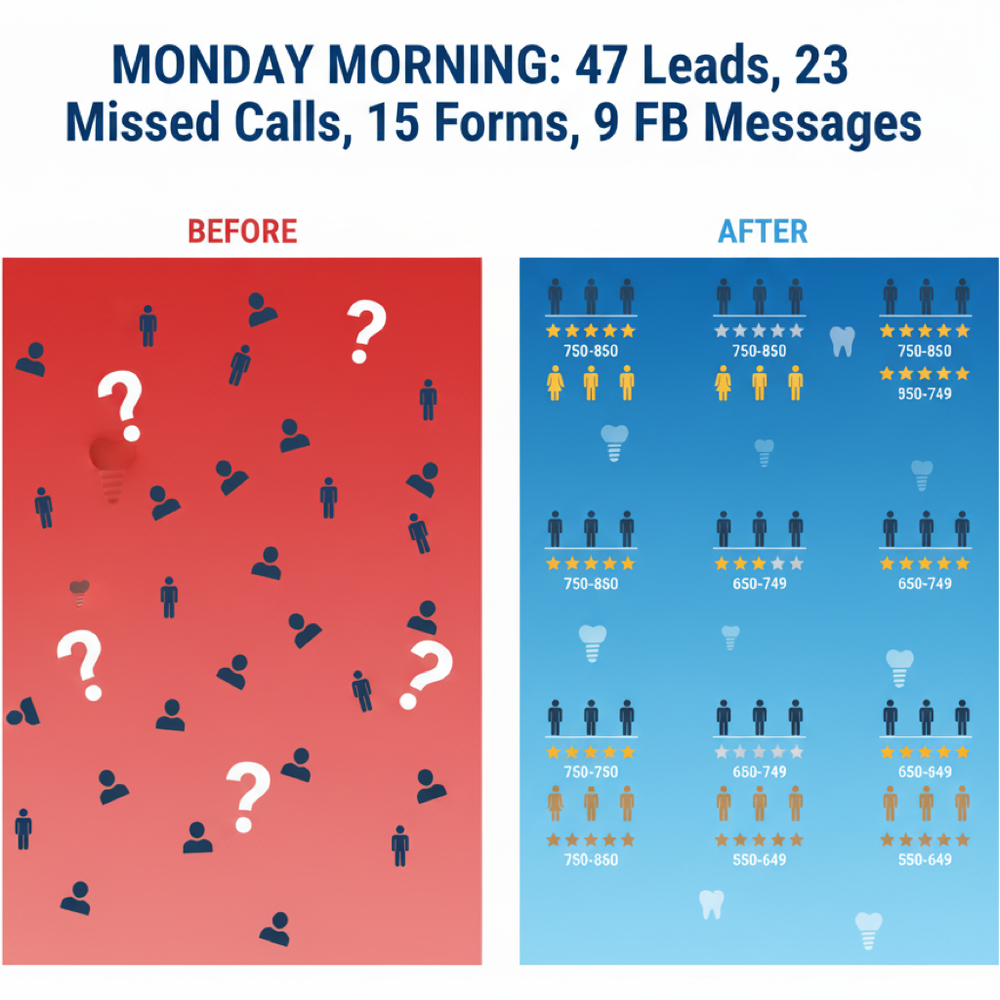
Picture a typical Monday morning for your treatment coordinator:
- 47 new leads in the CRM from the weekend
- 23 missed calls to return
- 15 website form submissions
- 9 Facebook inquiries
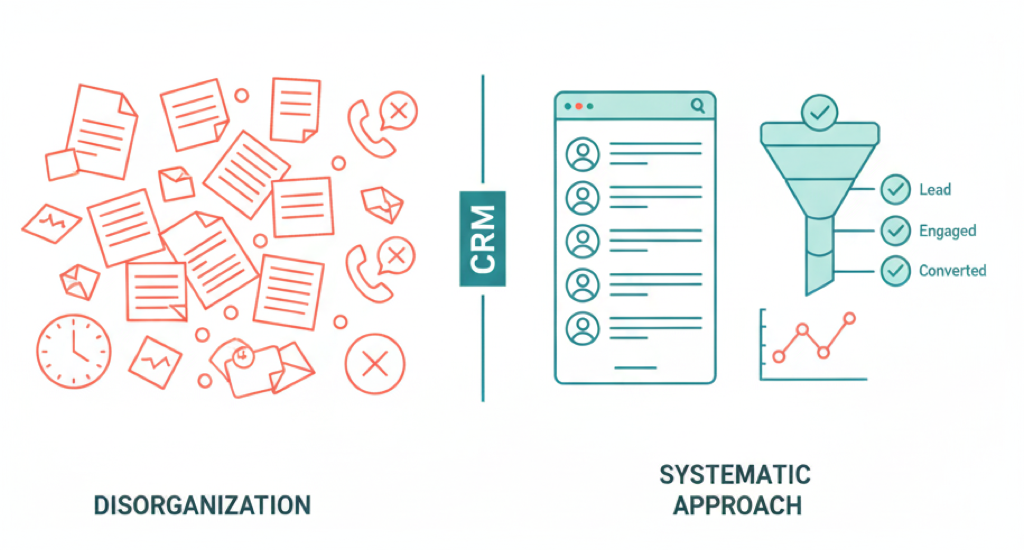
Where do you start? The traditional “first-come, first-served” approach means you could spend hours calling cold leads while a hot prospect with a 750+ credit score ready to pay for All-on-4 moves on to your competitor.
Hidden Signals of Purchase Intent
Research from Progressive Dental Marketing reveals: patients who spend over 3 minutes in a treatment cost calculator and check financing options convert 4x more often. Yet this behavioral data typically goes untracked.
Critical data points that are rarely captured:
- Time spent on pricing pages
- Selection of premium options (zirconia vs. acrylic)
- Financing calculator interactions
- Insurance information provided
- Credit scores above 650
AI Scoring: From Chaos to System
Modern AI scoring systems analyze up to 50 behavioral factors in real-time. Instead of a simple chronological list, coordinators receive a prioritized queue with conversion probability scores.
Real-World Example:
| Lead A | Lead B | |
|---|---|---|
| Submitted | 2 AM, name and phone only | 7 min in calculator, All-on-4 with zirconia |
| Details | No insurance, no pricing interaction | Delta Dental, 720 credit score, 24-mo plan |
| Traditional queue | #1 (first in) | #34 (buried) |
| AI Score | 23/100 — Low priority | 94/100 — Maximum priority |
Without AI, your coordinator calls Lead A first and spends 15 minutes on a dead end. Lead B — worth $35,000 — sits in the queue until Tuesday.
With AI scoring, Lead B gets flagged instantly. Your team calls within 5 minutes. The case closes.
Implementation Results: 40-Practice Network Case Study
After implementing AI-powered lead prioritization across a network of 40 dental implant practices:
| Metric | Before AI | After AI | Change |
|---|---|---|---|
| Consultation-to-treatment conversion | 15% | 38% | +153% |
| Average first-contact time | 8 hours | 12 minutes | -98% |
| Marketing ROI | Baseline | +220% | +220% |
| Cases closed per coordinator | Baseline | +30% | No new hires |
Immediate Benefits of Proper Prioritization
Hot leads receive contact within 5 minutes — instead of random processing order.
Coordinators see complete context — not just “John wants consultation” but “John explored All-on-4, has insurance, ready for financing.”
Automatic skill-based routing — complex cases to senior coordinators, simple inquiries to junior staff.
Predictive alerts — system warns: “This lead profile matches 87% who went to competitors — immediate contact required.”
Reduced team burnout — coordinators work motivated leads instead of cold calling.
Why This Is Critical Right Now
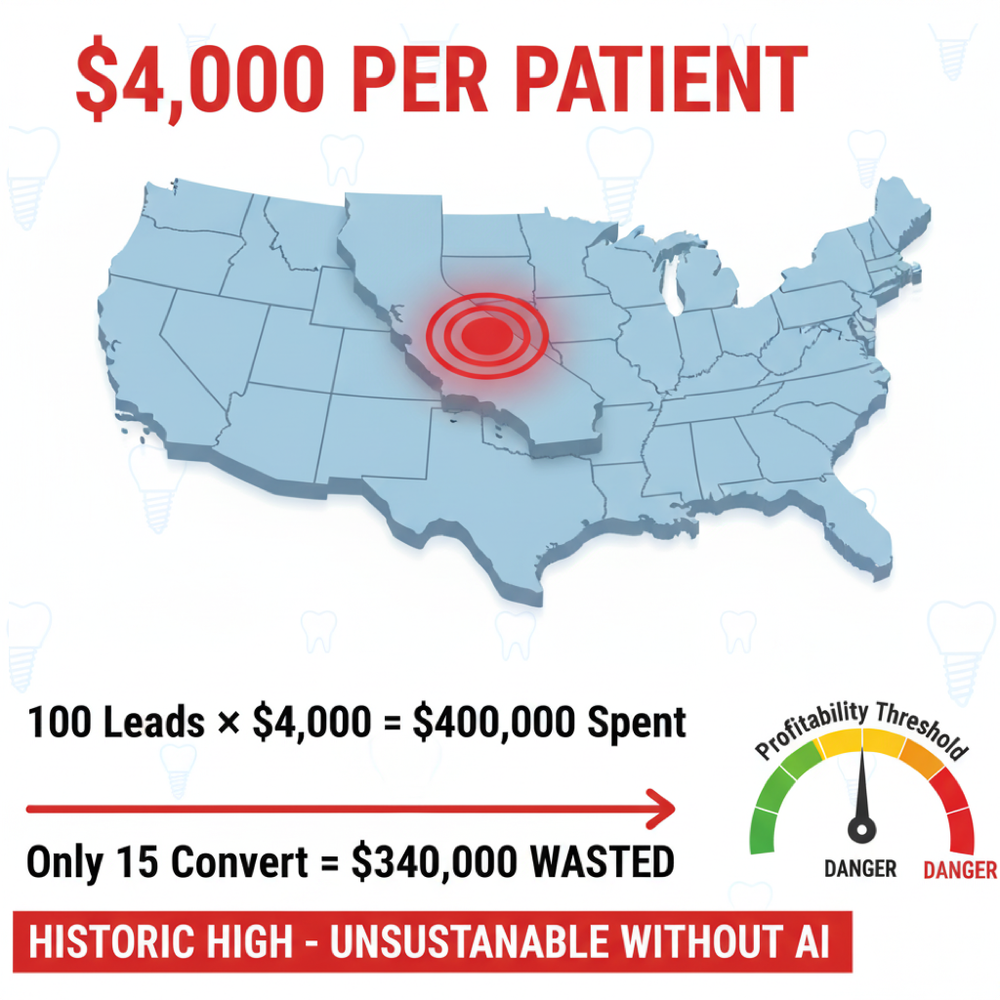
The cost of acquiring an implant patient in competitive markets has reached historic highs. In California, a single implant case through Google Ads exceeds $4,000. At a 15% conversion rate (industry standard), practices lose $3,400 on every unclosed lead.
AI scoring isn’t just about improving metrics — it’s the difference between a profitable and unprofitable practice.
The Implant Engine Effect
Leading agencies like The Implant Engine report that practices using pre-qualification and deposit systems achieve 80–90% show rates, compared to 50–60% industry average. When combined with AI prioritization, the compound effect is dramatic.
Consider this: Driven Dental Implant Marketing found that practices implementing both behavioral scoring and rapid response protocols closed $130,000 in implant cases from leads that would have previously been lost.
Your Next 30 Days
Every day without lead prioritization is lost revenue. While you’re reading this article, your high-intent leads with excellent credit and All-on-4 readiness are sitting in a general queue, cooling off, and scheduling with competitors who responded faster.
Modern AI scoring widgets integrate with any CRM within 24 hours and deliver results from day one. The question isn’t whether you need this system — it’s how many more patients you’re willing to lose while you deliberate.
The Bottom Line
According to research from Teraleads, Progressive Dental Marketing, and Driven Dental Implant Marketing, proper lead prioritization can deliver dramatic revenue growth within 30 days. In an industry where a single All-on-4 case represents $25,000–$40,000 in revenue, can you afford not to prioritize correctly?
Don’t let your most valuable leads get lost in the noise. The technology exists, it’s proven, and your competitors are already using it. And scoring only pays off when the top of the funnel is full — the acquisition side (channels, offers, and landing pages that attract implant patients in the first place) is covered in our dental implant lead generation guide.
And remember that lead quality starts before the lead ever reaches your website: a growing share of high-intent patients now arrive via AI assistants like ChatGPT, pre-qualified by their own research. How to become the practice those AIs recommend is covered in How to Get Your Dental Practice Recommended by ChatGPT.
Want to see AI lead scoring in action on your website?
AI-powered cost calculator with built-in lead scoring. 10-minute setup. Works with any CRM.
Based on industry research showing that practices lose 28% of calls and take 8+ hours to respond to web forms. Smart prioritization isn’t optional — it’s survival.