GEO for Dentists: The Complete 2026 Guide to Generative Engine Optimization


A patient in Miami opens ChatGPT and types: “I live in Miami, Florida and I am looking for dental care. Can you recommend dental implant providers with the best cost transparency? Give me pros and cons for each.”
That is not a hypothetical. It is a real query pattern we see hitting dental websites through AI search — long, conversational, specific, and ending with a shortlist of recommended practices. If your practice is on that shortlist, you just received the warmest lead in dentistry: a patient who asked for a recommendation and got you. If you’re not on it, you were never in the running — and you’ll never see it in your analytics.
Getting onto that shortlist is what GEO — Generative Engine Optimization — is about. This guide covers what GEO means for dental practices in 2026, how it differs from the SEO you already know, and the concrete steps to make your practice visible to AI assistants.
What Is GEO?
Generative Engine Optimization is the practice of making your website readable, trustworthy and quotable for AI systems — ChatGPT, Perplexity, Claude, Google’s AI Overviews and Gemini — so that when patients ask them for advice, your practice appears in the answer.
Traditional SEO optimizes for a ranked list of ten blue links. GEO optimizes for a synthesized answer that names two or three practices and explains why. There is no page two. Either the AI cites you, or it doesn’t. (For a full side-by-side breakdown, see our comparison: SEO vs GEO for dentists.)
Why This Matters Now, Not “Someday”
Three shifts made GEO urgent for dental practices:
1. Patients already ask AI for medical purchase decisions. Dental implants, veneers and orthodontics are high-cost, research-heavy decisions — exactly the category where people lean on AI assistants to compare options. The query examples above come from real AI-driven search traffic to dental content: city-specific, cost-focused, asking for named recommendations.
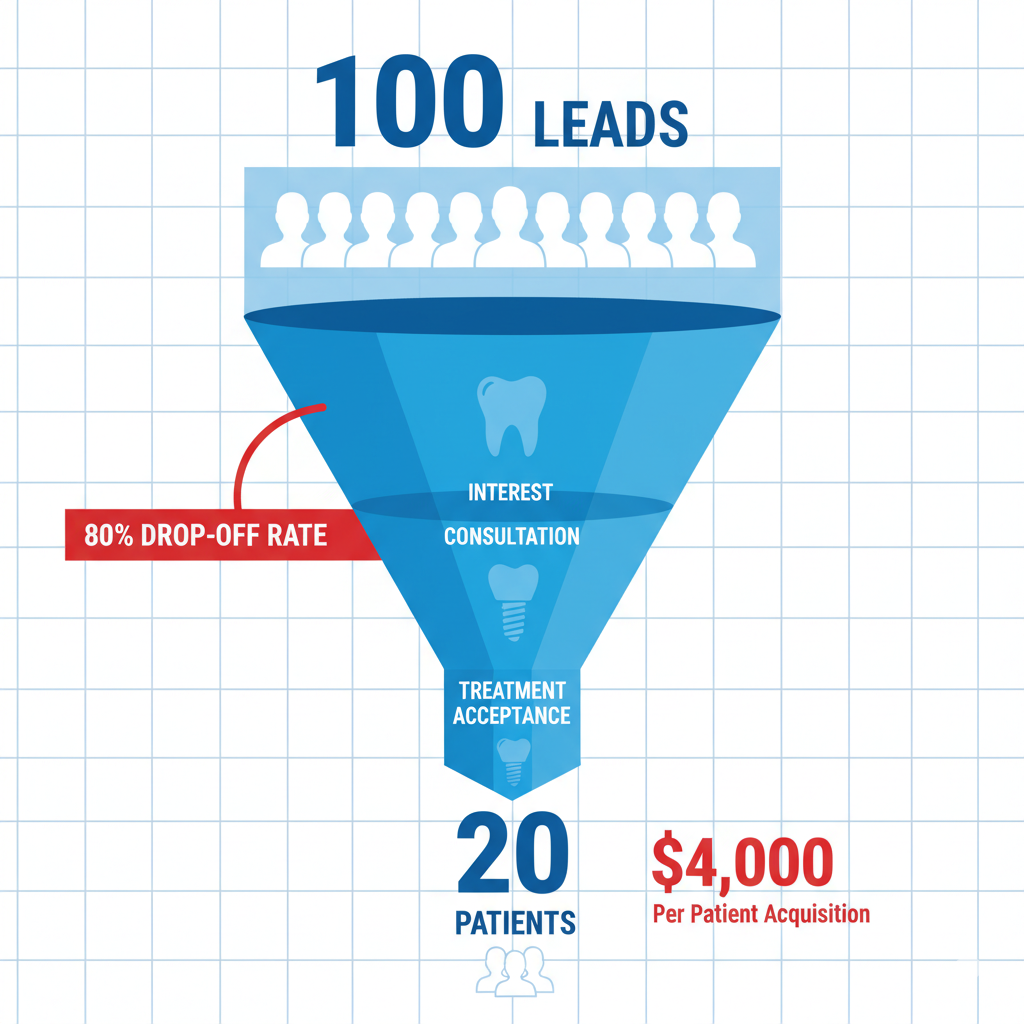
2. AI answers compress the funnel. A patient who asks Google “dental implant cost” sees ads, maps and ten links — you have many chances to be noticed. A patient who asks ChatGPT gets one answer with two or three names in it. The winner-take-most dynamic is far stronger than in classic search.
3. Most dental websites are invisible to AI — by accident. In the website scans we run at DentalPrice AI, practices routinely fail the basics: robots.txt rules that block AI search crawlers, no structured data, no pricing information for an AI to quote, and content that answers no actual patient question. Their competitors don’t have to be brilliant to win — just readable.
How AI Assistants Actually Choose Dentists
When ChatGPT or Perplexity answers “recommend an implant dentist in Orlando with transparent pricing,” it typically runs its own web searches in the background (called grounding), reads the top results, and synthesizes an answer with citations. That process rewards a specific kind of page:
- Pages that answer the literal question. An AI searching for “implant cost transparency Orlando” cites the page that openly discusses implant costs — not a homepage that says “affordable smiles.”
- Pages with verifiable specifics. Numbers, price ranges, data, named procedures. AI models are built to prefer concrete, citable claims over marketing language.
- Pages it is allowed to read. If your robots.txt blocks
OAI-SearchBotorPerplexityBot, you have opted out of AI recommendations entirely — usually without knowing it.
We have watched this play out in our own data: articles with original statistics and open cost discussions get pulled into AI answers at position #1 for exactly these long conversational queries, while polished but generic pages never appear.
The 7 Pillars of GEO for a Dental Practice
1. Let AI search bots in
Check your robots.txt. The bots that matter for being recommended are the search/browsing crawlers: OAI-SearchBot and ChatGPT-User (ChatGPT), PerplexityBot, ClaudeBot search access, and Google’s crawlers for AI Overviews. Blocking training bots (like GPTBot) is a separate, legitimate choice — but blocking search bots makes you invisible. Many WordPress security plugins and CDN “AI blocking” toggles block everything indiscriminately. Our free AI Visibility Report checks bot-by-bot access automatically.
2. Publish transparent pricing content
This is the single strongest GEO lever for dentistry, because cost is what patients ask AI about. Publish honest price ranges, explain what drives costs, and keep it current. Practices resist this (“competitors will see our prices”) while patients — and now AI assistants — simply route around practices that hide them. We covered the market shift in detail in The Price Transparency Revolution.
3. Add structured data (schema markup)
Schema is how you tell machines what you are: a Dentist organization, at this address, offering these procedures, with these reviews and prices. It is machine-readable trust. Most dental sites have none or only what their template shipped with. Our schema markup guide for dental practices includes copy-paste examples for the schemas that matter: Dentist, MedicalProcedure, FAQPage, and AggregateRating.
4. Answer real patient questions in FAQ format
AI answers are question-shaped, so question-shaped content gets cited. Every procedure page should answer the questions patients actually ask: “How much does X cost?”, “Does insurance cover it?”, “How long is recovery?”, “What are the alternatives?” — in plain language, marked up with FAQ schema.
5. Publish original data, not adjectives
The dental content that AI engines cite most is content with numbers no one else has: case volumes, cost benchmarks, acceptance rates, outcome statistics. “State-of-the-art care with a gentle touch” is invisible to AI; “single implants at our practice range from $3,800 to $4,600 including the crown” is quotable. If you have any proprietary data, publish it.
6. Keep local signals consistent
AI assistants cross-reference your website against Google Business Profile, review platforms and directories. Inconsistent names, addresses or phone numbers lower confidence; strong recent reviews raise it. This is classic local SEO — it just now feeds a second consumer: the AI.
7. Measure and iterate
Test it yourself quarterly: ask ChatGPT (with browsing), Perplexity and Google exactly what your patients would ask — “best implant dentist in [your city] with transparent pricing” — and see who gets named. Track AI referral traffic (chatgpt.com, perplexity.ai referrers) in your analytics. For a systematic pass, run through our AI visibility checklist or get the automated version in a free AI Visibility Report.
GEO and SEO Are Not Rivals
Everything above also helps classic SEO: structured data, FAQ content, transparent pricing and original data are exactly what Google’s own algorithms reward in 2026. GEO is not a replacement discipline — it is the recognition that your content now has two readers, human and machine, and the machine increasingly makes the introduction. The practices that win the next five years of patient acquisition are the ones AI can read, verify and confidently recommend.
Where to Start This Week
- Run a free scan. Our AI Visibility Report shows your AI Readiness score, which AI bots can and cannot read your site, and a full technical audit — in about 90 seconds.
- Fix bot access if anything critical is blocked (usually a one-line robots.txt change).
- Pick your highest-value procedure (implants for most practices) and rebuild that page with pricing ranges, FAQ schema and real numbers.
- Ask the AIs who they recommend in your city today — and again in 60 days.
The Miami patient asking ChatGPT for implant recommendations is already out there. The only question is whose name is in the answer.
Want to know how AI sees your practice right now? Get your free AI Visibility Report — AI Readiness score, bot access check, and a complete website audit in 90 seconds.